Coastal Birds
Langebaan Lagoon is one of the most important bird habitats on the African continent — over 65 species have been recorded here, with populations of international significance.
One of the most iconic sights at Langebaan — large flocks wade through the shallow lagoon, feeding on blue-green algae and small crustaceans. Best seen early morning when the water is calm. Can number in the thousands during peak season.
A South African endemic with striking black plumage and a bright orange-red bill. Forages along rocky shores and sandbars for mussels, limpets, and worms. Often seen in pairs along the Shark Bay shoreline.
Large flocks of Cape Cormorants use the lagoon as a key feeding ground, diving repeatedly for the abundant fish populations. Often seen perched on rocks with wings outstretched to dry. An important indicator species for lagoon health.
Impressive birds with wingspans exceeding 3 metres. Pelicans are often seen cooperative-fishing near the lagoon channel mouth — a spectacular sight when dozens work together to herd fish into the shallows.
Occasionally spotted resting on rocks near Shark Bay after feeding in the cold Benguela Current offshore. The West Coast waters are a critical foraging zone for this critically endangered species. A rare but memorable sighting on the cam.
A tiny jewel of the lagoon edge — this brilliantly coloured bird perches on reeds and low branches, diving with precision for small fish in the shallows. One of Africa's most beautiful birds and a favourite sighting on the cam.
The most common large gull on the West Coast, frequently seen patrolling the shoreline and hovering over the water searching for fish scraps and invertebrates. Bold and opportunistic — often seen stealing fish from other birds.
A diving duck that feeds on aquatic plants and invertebrates in the calmer sections of the lagoon. The chestnut-brown female and deep burgundy male are most often spotted in the protected inlets away from the main channel.
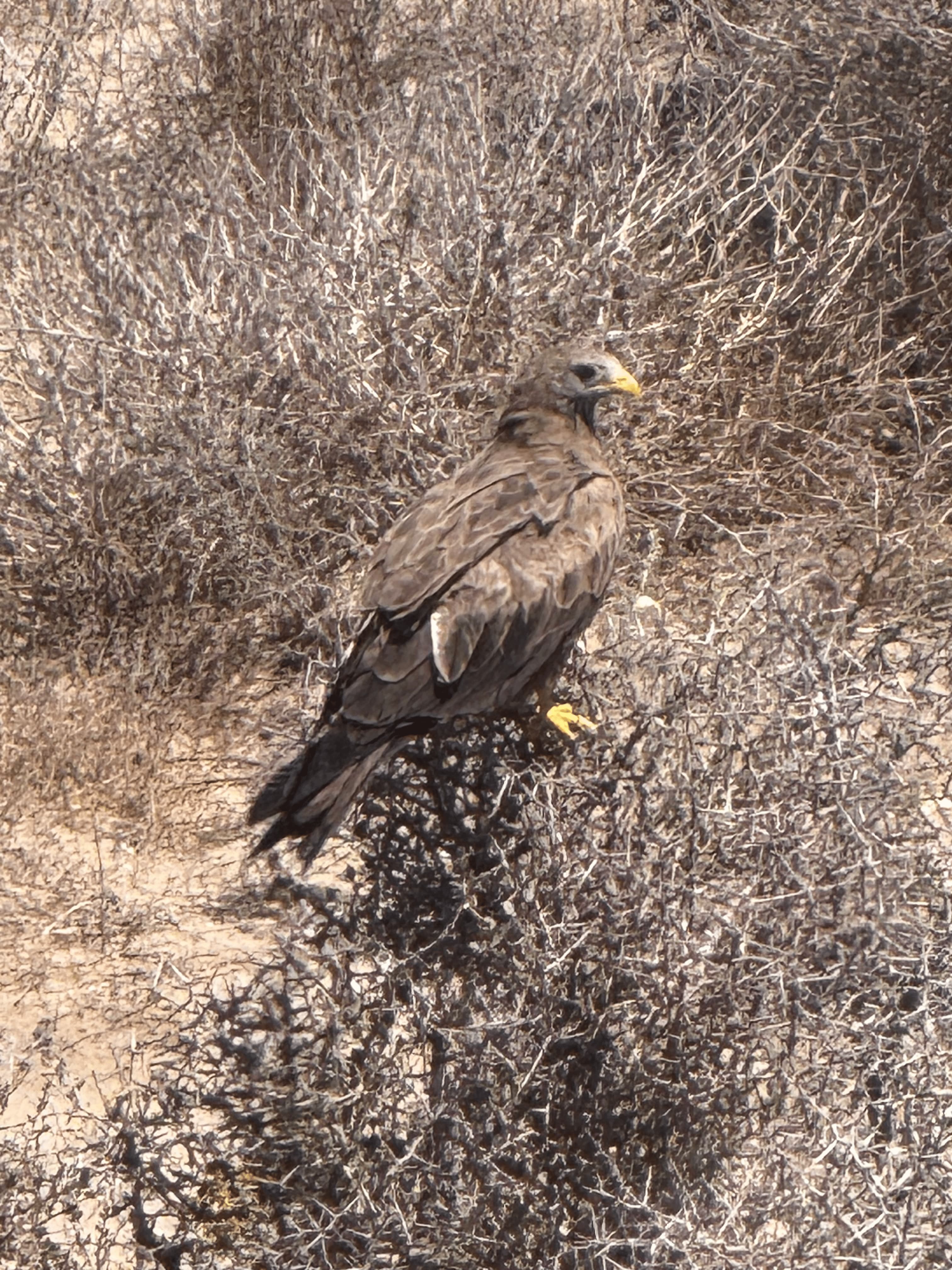
One of the most frequently seen raptors along the West Coast during summer. Steppe Buzzards migrate from their breeding grounds in eastern Europe and central Asia, arriving around October and departing in March–April. Stocky and powerful, they perch on low bushes, fence posts, and scrub, scanning for rodents, lizards, and large insects. Plumage varies from pale brown to dark chocolate — the yellow cere and feet are a reliable identification feature. Often confused with the resident Jackal Buzzard, but the Steppe Buzzard lacks the rufous breast band.
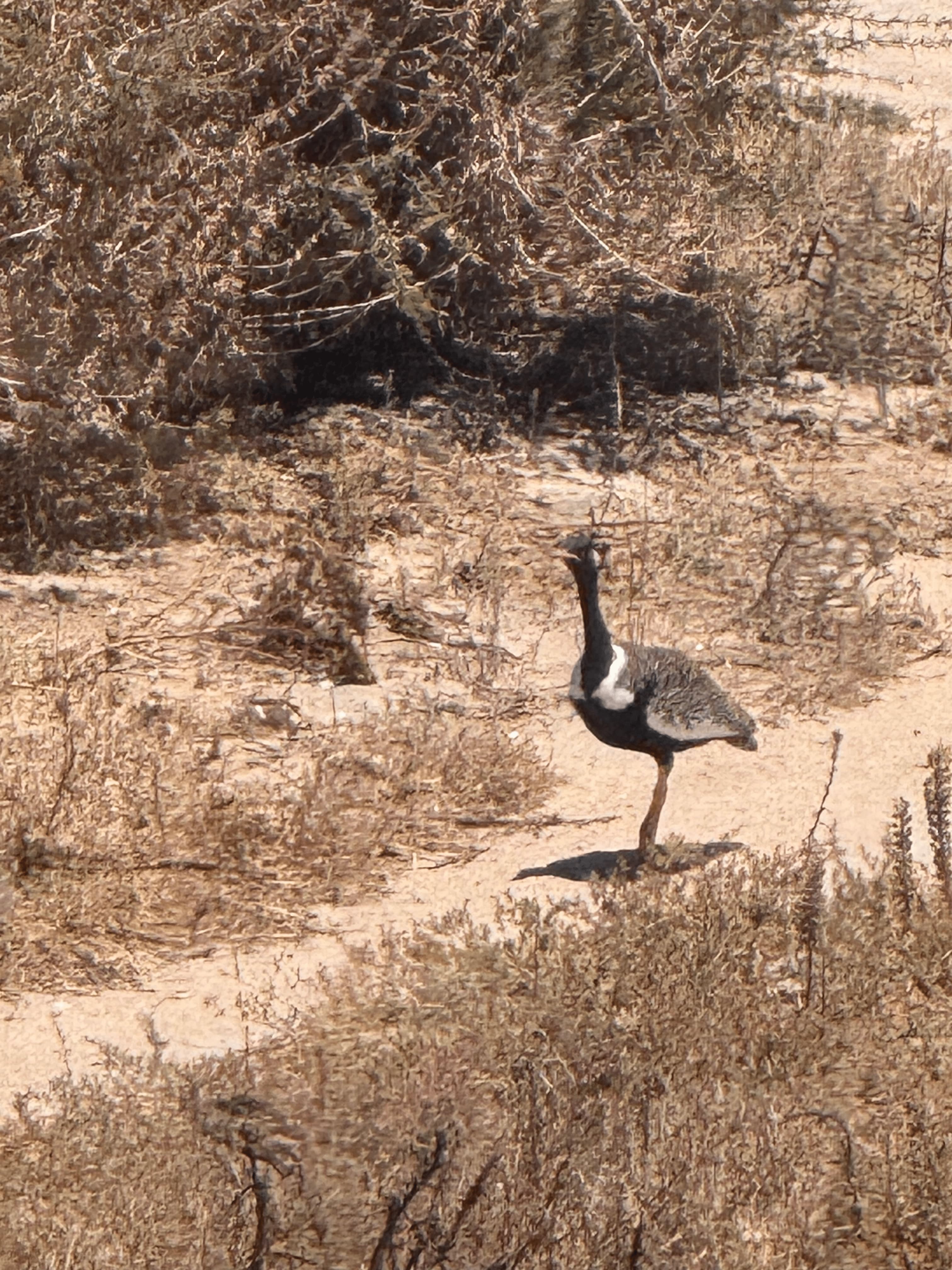
A striking ground-dwelling bird endemic to the western and southern parts of South Africa. The male is unmistakable with his jet-black underparts, bold white ear patches, and long pinkish legs. Females are more cryptically patterned in brown and buff for camouflage while nesting. Southern Black Korhaans favour the low fynbos scrub and strandveld around Langebaan, where they forage for seeds, insects, and small reptiles. Males are famously vocal — their loud, raucous calls carry far across the veld, especially during the breeding season. Often seen strutting through open ground between bushes or performing dramatic aerial display flights. Classified as Vulnerable due to ongoing habitat loss from coastal development.
Marine Life
The cold, nutrient-rich Benguela Current that flows along the West Coast supports an abundance of marine life — some of which ventures into the sheltered waters of Langebaan Lagoon.
Pods of common dolphins occasionally enter the lagoon mouth, often following shoals of fish. One of the most exciting live cam sightings — they may surf the channel entrance waves before returning to the open ocean.
Small, harmless sharks occasionally spotted in the lagoon's tidal channels, feeding on crustaceans and small fish. Despite the bay's name, Shark Bay does not have a significant shark population — the name predates modern usage.
The lagoon is rich with local fish species that form the base of the food chain. Mullet (harder), steenbras, and Cape silverside are among the most common — critical food sources for the birds and dolphins that frequent the bay.
Although their main colonies are further north and south, Cape fur seals are occasionally spotted resting on rocks near Shark Bay or hunting in the channel. Always a crowd-pleasing surprise on the live cam.
Land Wildlife & Fynbos
The dunes and fynbos scrubland surrounding Shark Bay are part of the Cape Floristic Region — one of the world's six floral kingdoms and a UNESCO World Heritage Site.
South Africa's only true fox — small, silver-grey, and nocturnal. Occasionally spotted at dusk along the dune edges near the bay, hunting rodents and insects in the fynbos scrubland.
From August to October the dunes surrounding Shark Bay erupt with colour — namaqualand daisies, gazanias, lachenalias, and hundreds of endemic fynbos species bloom in spectacular profusion after the winter rains.
Common on the rocky outcrops and sandy paths around the bay. These sleek, bronze-coloured lizards bask in the morning sun and are a familiar sight to anyone visiting Shark Bay in person.
The world's largest turtle occasionally passes through West Coast waters on migration routes. Rarely spotted, but the offshore waters around Langebaan form part of an important marine migration corridor for this ancient species.